The End of Per-Seat Pricing: Why SaaS is Shifting to Agentic Work Units
Summary
The software industry is undergoing its most significant economic transformation in two decades: the death of the "per-seat" pricing model. As AI agents increasingly automate workflows, SaaS vendors are shifting away from charging for human access and toward charging for autonomous labor using metrics like the Agentic Work Unit (AWU). This article explores the flaws of legacy pricing models in the AI era, breaks down how AWUs and outcome-based pricing work, and provides actionable advice for enterprise software buyers navigating this complex transition.
Estimated Reading Time: 12 minutes
Want the full details? Keep reading below.
What You'll Learn in This Article
| Section | What It Covers |
|---|---|
| The 20-Year Reign of the "Seat" | A historical look at why per-seat pricing dominated SaaS and why it's breaking. |
| The AI Efficiency Paradox | How AI agents misalign traditional pricing models by penalizing vendors for creating efficient products. |
| Enter the Agentic Work Unit (AWU) | A deep dive into what an AWU is, how it's measured, and why companies like Salesforce are adopting it. |
| Tokens vs. Work: The Inference-to-Work Ratio | Why buyers reject raw token pricing and demand outcome-focused metrics. |
| The 3 Emerging AI Pricing Models | A comparison of usage-based, outcome-based, and the new hybrid pricing equilibrium. |
| How Buyers Can Prepare | Strategies for budgeting unpredictable usage costs and mitigating SaaS creep. |
| Conclusion: Building for the Agentic Era | Final thoughts on the shift to Service-as-Software and Wonzly's infrastructure approach. |
The 20-Year Reign of the "Seat"
For the better part of the 21st century, the Software-as-a-Service (SaaS) industry operated on a single, universally understood economic principle: the "per-seat" pricing model. Whether you were buying a CRM, an issue tracker, a design tool, or a communication platform, the logic was identical—you paid a fixed monthly or annual fee for every human who needed access to the software.
This model made perfect sense for the "Systems of Record" era. In a traditional SaaS application, software was essentially a digital workspace. The software itself didn't do the work; it provided a canvas for human employees to execute tasks. Because humans were the bottleneck for productivity, a company's success with a software platform scaled linearly with headcount. If you hired ten new sales representatives, you bought ten new CRM licenses. Headcount equaled value, and per-seat pricing captured that relationship elegantly.
However, as we move deeper into 2026, the foundational assumptions of per-seat pricing are fracturing. The catalyst for this fracture is the rise of autonomous AI agents. We are no longer just buying software that human employees use to do work; we are increasingly buying software that does the work for us. This paradigm shift from software-as-a-tool to digital coworkers fundamentally breaks the per-seat economic model.
Consider the implications:
- The Phantom User: An AI agent operates around the clock, processing data, routing tickets, and closing support inquiries without ever needing to "log in" or occupy a physical seat.
- Value Decoupling: If a single software platform can now execute the workload of twenty human employees, charging a flat monthly fee for one administrative "seat" vastly undervalues the software's economic contribution to the enterprise.
- Customer Frustration: Simultaneously, enterprise buyers are becoming deeply cynical about paying premium prices for "shelfware"—unused licenses sitting dormant while the organization is concurrently hit with hidden "AI taxes" and consumption fees for the actual work being done.
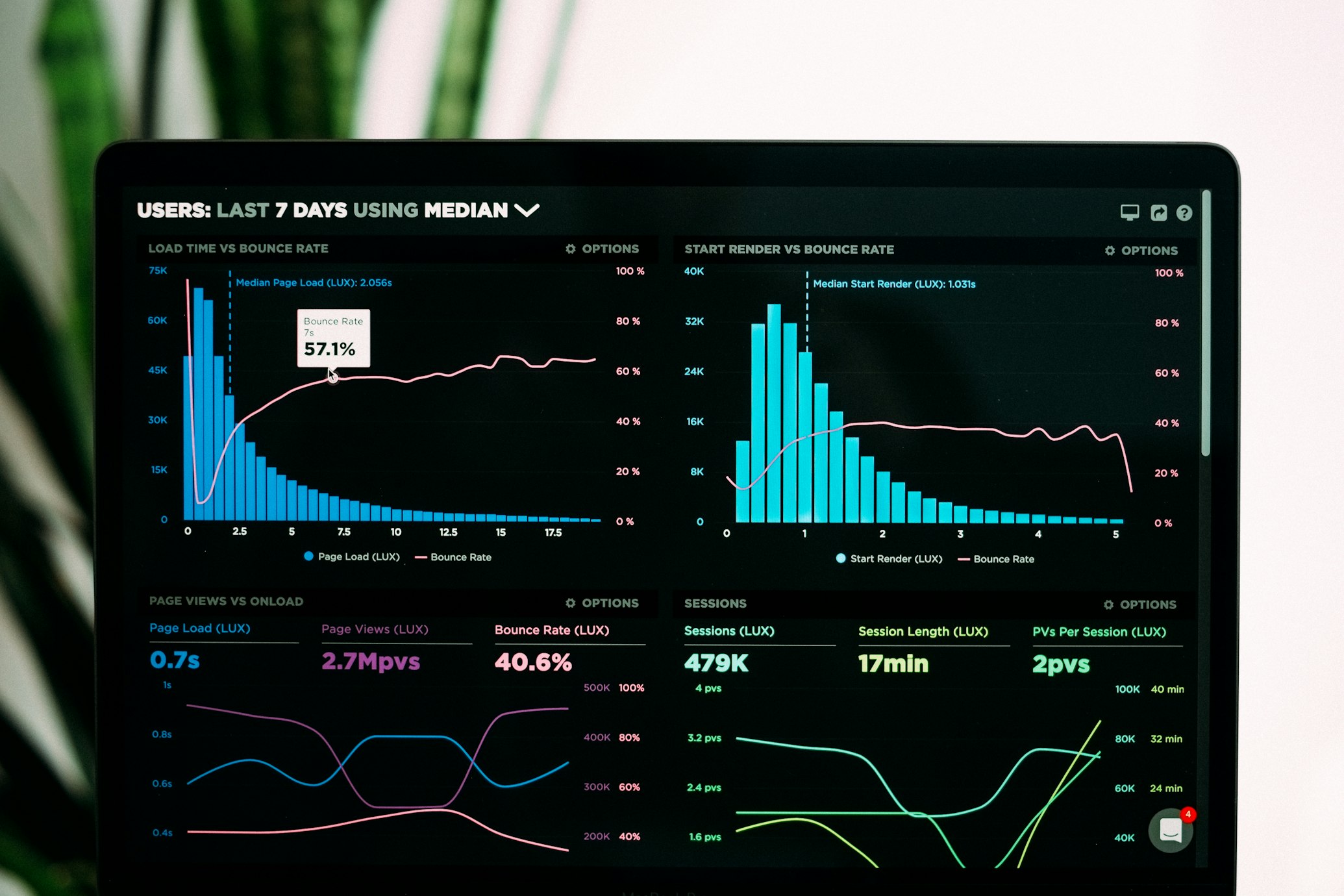
The per-seat era is ending because it no longer aligns with how value is created, delivered, and consumed in the modern enterprise.
The AI Efficiency Paradox
To understand why the industry is abandoning per-seat pricing, we must examine what economists and founders call the "AI Efficiency Paradox." This paradox describes the perverse incentives that arise when you apply legacy pricing models to breakthrough automation technology.
In a traditional per-seat model, a SaaS vendor's revenue grows when their customer's headcount grows. The software company is economically incentivized to build a tool that requires more human interaction, not less. But the entire premise of agentic AI is to drastically reduce the human effort required to achieve an outcome.
If a SaaS vendor builds an incredible AI feature that makes a customer's support team 50% more efficient, the customer might lay off half of their support staff or halt hiring entirely. Under the per-seat model, the SaaS vendor is "rewarded" for this incredible technological achievement with a 50% reduction in revenue, as the customer cancels their now-redundant seat licenses. The vendor is effectively penalized for building a superior product.
This misalignment creates severe structural issues:
- Margin Compression: AI features (like LLM inference and vector search) incur real, variable costs every time they are executed. If a vendor charges a flat $20/month fee, but a "power user" leverages an AI agent to execute thousands of complex tasks, the vendor loses money on that user.
- Stalled Innovation: If vendors cannot profitably monetize efficiency gains, they will be hesitant to deploy truly autonomous features, opting instead for shallow "AI copilots" that still require a human in the loop (and thus, a paid seat).
- The Cannibalization Fear: Legacy SaaS giants are watching AI-native startups deploy agents that do the work of entire departments. They realize that if they don't change their pricing architecture, their seat-based revenue will be cannibalized by agentic AI in production.
The solution to the AI Efficiency Paradox is to decouple revenue from headcount and tie it directly to the volume of work performed.
Enter the Agentic Work Unit (AWU)
As the industry pivots away from human seats, a new metric has emerged to serve as the denominator of software value: the Agentic Work Unit (AWU). Pioneered and popularized by major players like Salesforce in their transition to AI-first architectures, the AWU is designed to measure the actual productive output of an autonomous system.
But what exactly is an Agentic Work Unit?
An AWU is a discrete, billable unit of productive work completed by an AI agent rather than a human. It represents a bounded task or an outcome, rather than a measure of time or raw compute power.
How AWUs are Defined
Because software platforms vary wildly, an AWU is highly contextual. However, it generally shares these characteristics:
- Outcome-Oriented: An AWU is not "thinking about a problem"; it is executing a solution.
- Multi-Step Execution: A single AWU often encompasses an entire chain of reasoning. For example, an agent might read an email, query a database, draft a response, and send an API call. In many models, this entire workflow counts as a single AWU.
- Measurable Value: The unit must represent a task that previously required human intervention.
Examples of AWUs in Practice
- Customer Support: A fully resolved customer inquiry (not just an initial response, but a completed ticket).
- Sales/CRM: A qualified lead generated, enriched with external data, and inserted into the sales pipeline.
- Marketing Operations: A personalized email campaign drafted, segmented, and scheduled for delivery.
- Data Analytics: A complex SQL query generated, executed, and summarized into a natural language report.
By shifting pricing to AWUs, SaaS vendors align their revenue directly with the customer's success. If the agent resolves 10,000 tickets this month, the customer pays for 10,000 AWUs. If volume drops to 5,000 next month, the cost scales down accordingly. This creates a true "Service-as-Software" relationship, where the vendor is essentially acting as an outsourced, digital labor force.
Tokens vs. Work: The Inference-to-Work Ratio
A common question among SaaS operators is: Why not just charge customers for the raw AI tokens they consume? After all, foundation models from OpenAI and Anthropic charge per million tokens. Why shouldn't SaaS applications simply pass those costs along with a markup?
While token-based pricing is technically "honest" about the underlying Cost of Goods Sold (COGS), enterprise buyers violently reject it. Tokens are an infrastructure metric, not a business metric.
The Problem with Token Pricing
- Unpredictability: A customer cannot accurately forecast how many tokens an AI agent will use to solve a problem. One query might take 500 tokens; a slightly more complex query might trigger a multi-step reasoning chain that consumes 15,000 tokens.
- Lack of Value Correlation: Processing 10,000 tokens of garbage output costs the same as 10,000 tokens of brilliant strategic insight. Tokens measure "talk," not "work."
- The Punishment of Progress: As AI models become more capable, they often become more efficient (using fewer tokens) or employ "Chain of Thought" reasoning (using vastly more tokens). Tying pricing to tokens subjects the customer to wild price swings based on the vendor's backend architectural choices.
The Inference-to-Work Ratio
Instead of exposing buyers to token counts, forward-thinking SaaS companies use the AWU to abstract the complexity of AI compute. This introduces a critical internal metric for vendors: the Inference-to-Work Ratio.
The Inference-to-Work Ratio measures how much raw compute (inference/tokens) it takes an AI agent to successfully complete one billable AWU.
- Vendor Goal: The vendor wants to decrease the Inference-to-Work ratio. By optimizing prompts, caching frequent queries, and routing simpler tasks to smaller, cheaper models (like Llama 3 8B instead of GPT-4), the vendor reduces their COGS while still charging the customer the same fixed rate per AWU.
- Customer Goal: The customer doesn't care about the ratio at all; they only care that the AWU was successfully completed at the agreed-upon price.
AWUs provide elasticity. They allow the vendor to capture the value of the outcome regardless of how many tokens were required to reach it, creating a much healthier dynamic between buyer and seller.

The 3 Emerging AI Pricing Models
As the industry abandons per-seat pricing, it is fragmenting into several new structures. In 2026, we see three primary models dominating the landscape of AI-native SaaS.
1. Pure Usage-Based Pricing (UBP)
In a pure UBP model, customers pay strictly on a "pay-as-you-go" basis. There are no base subscription fees, and costs are metered entirely by consumption metrics like API calls, workflow executions, or AWUs.
- Pros: Perfectly aligns cost with value. Extremely low barrier to entry for new customers.
- Cons: Revenue is highly volatile for the vendor. For the buyer, it can lead to "bill shock" if usage spikes unexpectedly. Enterprise procurement teams often struggle to get budget approval for purely variable, uncapped expenses.
2. Outcome-Based Pricing
This is the holy grail of Agentic AI pricing. Instead of charging for usage or effort, the vendor charges only for successful business results. For example, a legal AI tool might charge $50 per successfully reviewed and redlined contract, or a sales AI might take a percentage commission on closed deals.
- Pros: The ultimate alignment of incentives. Customers face zero risk—they only pay when they receive tangible ROI.
- Cons: Extremely difficult to implement and adjudicate. Disputes frequently arise over what constitutes a "successful" outcome. It requires the software vendor to take on immense risk if their AI underperforms.
3. The Hybrid Model (The 2026 Equilibrium)
Because Pure UBP is too volatile and Outcome-Based Pricing is too risky, the industry has largely settled on a Hybrid Model as the current standard.
The Hybrid Model combines a predictable base subscription fee with variable charges for agentic usage.
- The Platform Fee (Base Subscription): Customers pay a flat monthly or annual fee to access the platform. This covers human seats (which are still needed for governance and oversight), data storage, security features, and general platform maintenance.
- The Usage Fee (Credits/AWUs): Customers purchase "buckets" of credits or AWUs (either via pay-as-you-go or committed annual contracts) to fund the autonomous work performed by the AI agents.
This hybrid approach gives vendors a predictable baseline of recurring revenue while allowing them to capture the upside of heavy AI consumption. For buyers, purchasing committed buckets of AWUs provides the budgeting predictability that enterprise finance teams demand.
How Buyers Can Prepare
The shift from predictable per-seat licensing to variable AWU models requires a fundamental change in how organizations buy and manage software. If you are a CTO, CIO, or procurement leader, you must adapt your strategies to avoid spiraling costs.
1. Master FinOps for SaaS Sprawl
In the agentic era, FinOps for SaaS Sprawl is no longer optional; it is a critical survival skill. When software was billed per-seat, the worst-case scenario for unused software was wasting $50 a month on a dormant license. In a usage-based AWU model, a poorly configured AI agent can run infinitely in a loop, consuming thousands of dollars of compute in a weekend. Buyers must implement robust monitoring tools to track AWU consumption in real-time and set aggressive spend limits across their tech stack.
2. Demand "Billable Unit" Clarity
Before signing a contract based on AWUs or usage credits, demand absolute clarity on how the vendor defines a billable unit.
- Does a failed AI query cost an AWU?
- If an agent requires human intervention to finish a task, is the AWU fully consumed?
- What happens if an agent gets stuck in a retry loop? Ensure your contracts explicitly protect you from paying for the vendor's backend inefficiencies.
3. The Great SaaS Audit
As AI agents become capable of handling workflows across multiple departments, enterprise buyers are realizing they are paying for highly redundant tools. You must conduct a thorough "SaaS Creep" audit. If a new AI-native customer success platform can autonomously route tickets, draft responses, and update the CRM, do you still need to pay for separate legacy helpdesk software? Consolidating tools around capable, agentic platforms is the best way to offset the variable costs of AWU pricing.
Conclusion: Building for the Agentic Era
The transition away from per-seat pricing is not merely a change in billing mechanics; it represents a philosophical shift in what software is supposed to be. For twenty years, software was a tool that humans wielded. Today, software is a digital coworker that executes tasks autonomously.
Pricing models must reflect reality. Agentic Work Units, hybrid usage tiers, and outcome-based pricing are the inevitable future of the SaaS industry because they align the vendor's success with the customer's actual business execution.
Here at Wonzly, we are deeply focused on building infrastructure that supports this new era. Whether you are managing complex link infrastructure, tracking attribution across a fragmented web, or exploring the best link in bio tools, you need platforms that deliver measurable, scalable value without punishing you for growth. The future belongs to software that does the work.
Ready to Get Started?
Wonzly makes link management, tracking, and digital infrastructure simple, fast, and powerful.
- Try Wonzly for Free → Create Your Account
- Explore Features → See What Wonzly Can Do
- Read the Docs → Developer Documentation
- Read More → Browse All Blog Posts
Frequently Asked Questions
What is an Agentic Work Unit (AWU)? An Agentic Work Unit (AWU) is a performance-based metric used by SaaS companies to bill for the autonomous work performed by AI agents. Instead of charging per human user or per raw compute token, an AWU measures a discrete, completed task, such as resolving a support ticket or generating a sales lead.
Why does per-seat pricing fail for AI SaaS? Per-seat pricing assumes that headcount equals value. Because AI agents automate workflows and reduce the need for human users, charging per seat penalizes the software vendor for making their product more efficient and valuable to the customer.
How is AI changing SaaS pricing models? AI is forcing a shift from flat-fee "per-seat" subscriptions to variable, consumption-based models. Because AI features incur real compute costs (COGS) every time they are used, vendors must link pricing to usage or outcomes to maintain profitable margins.
What is the best pricing model for AI products? Currently, the industry standard is a hybrid model. This combines a predictable base platform fee (for human access, security, and storage) with variable usage fees (credits or AWUs) for the autonomous tasks executed by AI agents.
How do I balance profitability and adoption when pricing AI? Focus on value-based pricing by ensuring your "value metric" aligns with how the customer measures success. Additionally, optimize your Inference-to-Work ratio by routing tasks efficiently on the backend, allowing you to maintain healthy margins without exposing users to unpredictable token costs.
Should an AI agent be considered a "seat"? Most industry experts and enterprise buyers agree that an AI agent should not be considered a traditional "seat." Treating agents as seats leads to confusing economics and fails to capture the scale at which agents can operate compared to human employees.